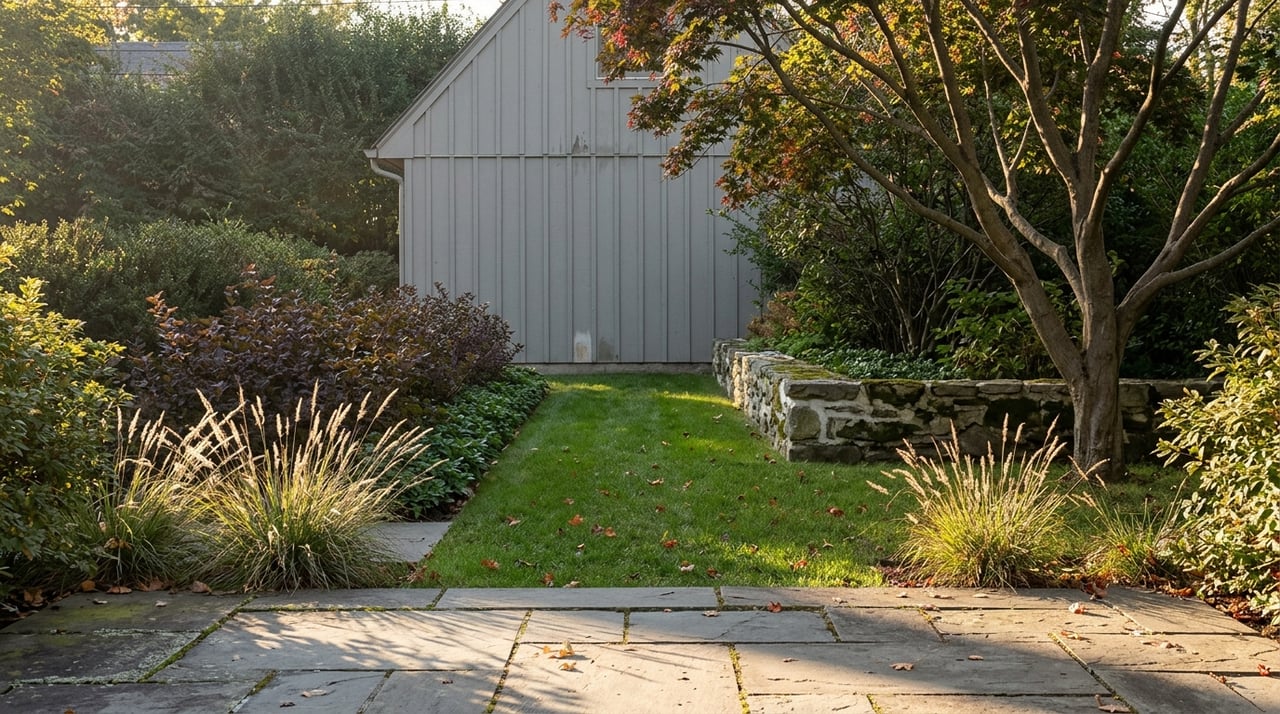
Beacon's 100-Night Rule: What an Airbnb Income Calculator Won't Tell You
August 27, 2026
August 27, 2026
Pull up a two-bedroom on Beacon's east side, drop the address into an Airbnb income estimator, and the tool will happily generate a projected annual revenue based on year-round occupancy at the neighborhood's average nightly rate. It's a clean number. It's also not a number Beacon will let you collect.
The city's short-term rental law, adopted in 2020, caps any host at 100 nights of short-term rental per calendar year, with no single stay longer than 30 nights. The unit has to be your primary residence. Accessory apartments can't be used for short-term rental at all. None of that shows up in a comps tool built for a national audience, and none of it shows up on the listing photos of a charming Beacon cottage with an Airbnb Superhost badge in the description. It shows up later, when a buyer who penciled in a full calendar of bookings discovers the ceiling is a third of that.
Here's what an income calculator typically assumes versus what Beacon's zoning code actually permits:
| Assumption in most rental calculators | What Beacon's law requires |
|---|---|
| Year-round bookings, 365 nights available | Maximum 100 nights per year |
| Any stay length | No single stay longer than 30 consecutive nights |
| Owner can live elsewhere | Host must occupy the unit as a primary residence |
| Basement or garage apartment counts as extra inventory | Accessory dwelling units cannot be rented short-term, full stop |
That last row matters more than it looks. Beacon has spent several years trying to make it easier to build accessory apartments, streamlining the approval process in 2022 and discussing further simplification in 2025 to align minimum unit size with the state building code. But every version of that policy has kept the same line: an ADU can house a relative or become a long-term rental, but it cannot become a second Airbnb unit on the same lot. If your investment plan involves converting a garage into a rentable studio and running it as a short-term listing, that plan runs into the code before it runs into a contractor.
For years, the practical answer to "what if I just don't register" was that Beacon didn't have the staff to check. That's changing, and the timeline shows how fast.
In February 2026, data from Inside Airbnb, a research project based in Newburgh, showed 133 Beacon units listed on the platform, with only 33 registered with the city as the law requires. By a city council update on July 20, 2026, City Administrator Ben Swanson reported that of 96 short-term rentals the city had identified through its own review, 39 were registered, 23 of those secured in 2026 alone. The compliance rate roughly doubled in five months, and it's still a minority of hosts.
The council isn't finished. Members are weighing whether to raise the current $25-per-day fine for operating without a permit and whether to require platforms like Airbnb and Vrbo to pull listings that aren't registered with the city. Council Member Amber Grant flagged the practical difficulty of enforcing the 100-night cap itself: "How do you prove that somebody is doing this for more than 100 days?" It's a fair question, and it's exactly the kind of question a city answers by building better systems, not by giving up.
Council Member Sergei Kraskikov pushed back on the idea that cracking down on short-term rentals would instantly solve Beacon's housing crunch, noting the relationship between STR enforcement and long-term rental supply is more complicated than a one-to-one swap. He's right that it's not simple math. But the direction of travel, more registration checks, higher fines under discussion, platform-level enforcement on the table, points toward tighter compliance, not a rollback of the underlying limits.
Beacon began collecting a 2 percent occupancy tax on hotel stays and short-term rentals as of January 1, 2025. Airbnb started collecting that tax on the city's behalf as of March 2026. The city expects the tax to generate roughly $200,000 in 2026, with the bulk coming from hotels like the Roundhouse and Mirbeau Inn & Spa rather than individual home hosts, but it applies to STR income too, and it's one more line item that a bare occupancy-rate calculator won't include.
There's a reason the city is watching hotel supply as closely as home-sharing. At a July 2026 council discussion, Council Member Carolyn Bennett Glauda noted that the least expensive hotel room she could find in Beacon ran $185 a night, compared to an average of $120 on Route 9 outside the city. That gap is part of why a developer has proposed building a hotel at 555 South Ave., the former Tioronda Hat Works Factory, which would require a zoning change to the Fishkill Creek Development District since hotels aren't currently permitted there, though inns and bed-and-breakfasts are. If that project moves forward, it's a signal the city would rather solve its lodging shortage with a purpose-built hotel than with an expanding home-sharing market it's actively trying to rein in.
None of this happened by accident. Roughly 41 percent of Beacon households are renter-occupied, and city data has identified around 185 units sitting vacant without long-term tenants. Mayor Lee Kyriacou has been direct about the connection: rental costs are high because supply is tight, and restricting short-term rentals would push some of that inventory back into the long-term market.
Graham Lawlor, an organizer with Beacon Hosts who lobbied for the original 2020 law, makes the counterargument from the host side. He's said the point of the regulation was to let longtime Beacon owners offset rising taxes and mortgage costs with modest STR income, not to create a parallel hotel industry. Both things can be true. The law was built to let existing homeowners earn some supplemental income within a hard cap, not to hand new buyers an open-ended short-term rental business.
That framing matters for anyone comparing a Beacon purchase against short-term rental math from another Hudson Valley town. The 100-night cap isn't a temporary quirk waiting to be relaxed. It's the compromise the city landed on to balance housing supply against homeowner income, and the current council conversation is about enforcing it better, not loosening it.
If short-term rental income is part of how you're evaluating a Beacon property, a few things are worth confirming before you write a number into your budget:
Can I buy a two-family home in Beacon and short-term rent one unit while living in the other? The primary-residence requirement applies to the host's home, so this is the kind of scenario worth confirming directly with the city's Building Department before you count on it, since specifics can depend on how the unit is classified.
Does the 100-night cap reset if I sell the property? The limit applies to the calendar year of rental activity, not to a specific owner, so a new buyer inherits the same cap rather than a fresh allowance.
Is Beacon likely to loosen these rules soon? The current council discussion is focused on tightening enforcement, including higher fines and platform-level delisting for unregistered units, not on raising the night limit or opening ADUs to short-term use.
If you're weighing a Beacon property with rental income as part of the plan, it pays to run the actual numbers before the actual offer. The Live Upstate Team works these calculations with buyers across Beacon, Newburgh, and the wider Hudson Valley every week, and can walk you through what a specific property's zoning and registration status mean for your bottom line. Schedule a free consultation and let's look at the math together before you're locked into a contract.
Stay up to date on the latest real estate trends.
When you work with our team, you gain strategic marketing, skilled negotiation, and dedicated support from listing to closing. We’re committed to delivering a smooth, successful experience tailored to your goals.