
Beacon Sellers Can No Longer Buy Their Way Past The Oil Tank Question
August 13, 2026
August 13, 2026
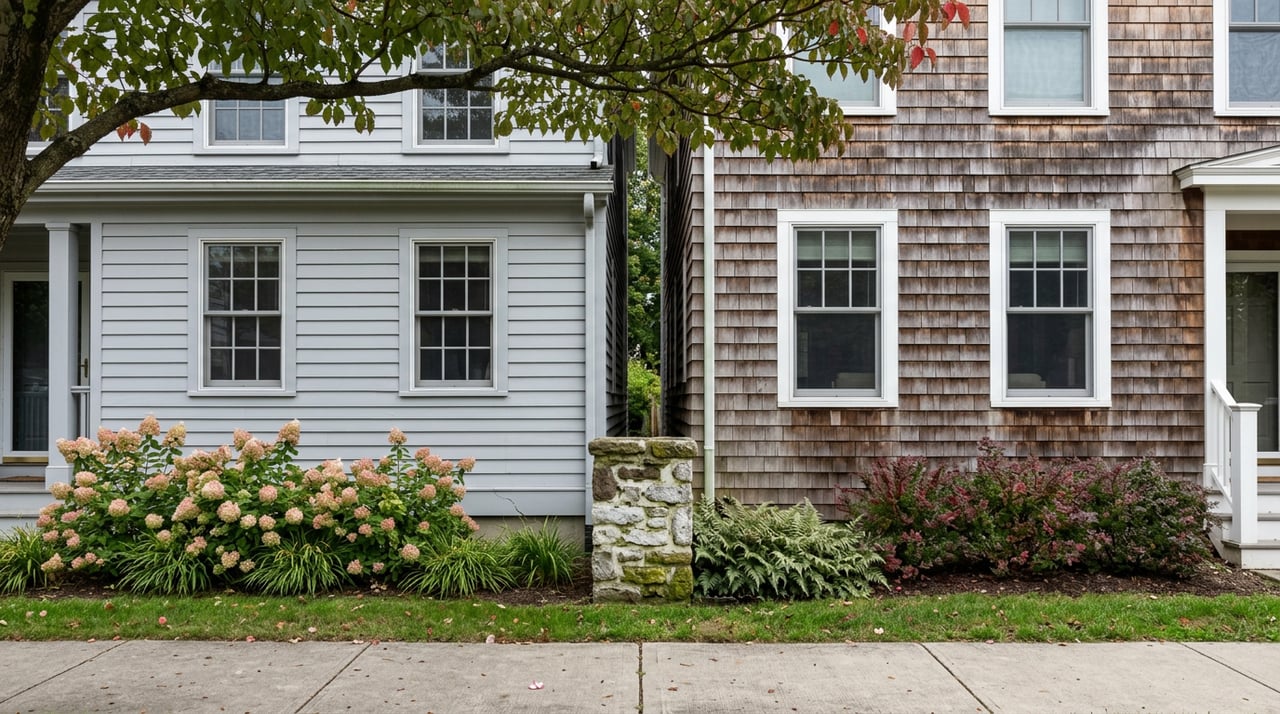
Walk the side yard of an older home near Beacon's Tree Streets or the blocks closest to Main Street and you'll sometimes find it: a capped pipe rising two or three inches out of the ground near the foundation, maybe a second one beside it, both leading nowhere anyone can see. A house that switched to gas or electric heat decades ago rarely bothers removing every trace of what came before. The pipes stay. The tank, more often than not, stays with them.
For years, that quiet detail didn't have to become a problem at closing. A seller who didn't know, or didn't want to know, could hand the buyer a $500 credit and skip New York's Property Condition Disclosure Statement entirely. As of March 20, 2024, that option no longer exists. Every seller of one to four family residential property in New York now has to complete and deliver the actual disclosure form, tank question included, before a buyer signs a binding contract.
The old rule was simple and, for a certain kind of seller, convenient. Rather than answer the 56 questions on the state's disclosure form about a house's history, structural quirks, and environmental past, a seller could write a check for $500 at closing and the disclosure obligation went away. It was a workaround built for exactly the situation an older Beacon house creates: genuine uncertainty about what's buried in the yard, paired with no desire to find out before a deal closes.
That workaround is gone. Legal counsel tracking the change describe it plainly: the amended Property Condition Disclosure Act eliminates the credit option, so the disclosure form is now mandatory with only a handful of narrow exemptions, such as sales by the estate of a deceased owner. Sellers can still sell a house "as is." They can no longer avoid stating, in writing, whether they know of a fuel tank on the property.
The statutory form is specific. Question 21 reads:
ARE THERE OR HAVE THERE EVER BEEN FUEL STORAGE TANKS ABOVE OR BELOW THE GROUND ON THE PROPERTY? IF YES, ARE THEY CURRENTLY IN USE? LOCATION(S). ARE THEY LEAKING OR HAVE THEY EVER LEAKED?
Under the old rule, a seller who checked "unknown" and paid the $500 credit never had to sit with that question. Now there's no financial escape hatch attached to it, which means "Unkn" is the answer a lot of Beacon sellers will actually have to write, and mean it, because their house is old enough that nobody currently living there installed the heating system.
Here's the part that surprises most sellers once they start asking around: the tank itself is probably not something New York State regulates at all. The Department of Environmental Conservation's own homeowner guide notes that most home heating oil tanks fall outside the state's Petroleum Bulk Storage program because they hold less than 1,100 gallons, the size of nearly every residential tank ever installed. Stricter local oversight only kicks in in three delegated counties: Nassau, Suffolk, and Westchester. Dutchess County isn't one of them.
In other words, if a 275-gallon tank has sat quietly under a Beacon backyard since the Eisenhower administration, no state agency is currently required to inspect it, test it, or make anyone remove it.
That's the gap that actually stalls closings. Lenders don't check whether DEC has jurisdiction. They check their own underwriting standards, and those standards are stricter than state law in this specific area. Guidance describing Fannie Mae's approach notes that when an appraiser becomes aware of a hazardous condition like an abandoned tank, the appraiser has to flag it and make the appraisal contingent on further inspection, regardless of whether any government agency has weighed in. FHA financing is often described as requiring the tank issue resolved before closing, full stop. Homeowners insurance carriers frequently carry pollution exclusion clauses that leave the property owner solely responsible for cleanup costs if a tank is later found to have leaked.
So a Beacon seller can be entirely correct that no state regulation applies to their property, and still watch a mortgage stall for weeks because the lender wants documentation the state never required. Regulation and financing are answering two different questions, and the second one is the one that actually controls the calendar.
| Documentation on file | Typical lender response |
|---|---|
| Tank removed or closed with contractor paperwork, permits, and soil results | Underwriting generally proceeds without added delay |
| Tank confirmed in ground, no closure documentation | Financing commonly paused until the tank is resolved |
| Suspected historic tank, no physical evidence located | Appraiser flags it; may require a professional opinion before the loan moves forward |
Beacon's housing character makes this more than a hypothetical. A meaningful share of the city's homes, concentrated in the older residential blocks near Main Street, the river, and the Tree Streets, predate 1940. Houses of that age were built in an era when oil heat was standard, long before gas lines and heat pumps became common conversions. A house that switched systems at some point in the past 50 years is exactly the profile CapCenter's guide to buying homes with tanks flags for closer scrutiny: current heating system installed after the home was originally built.
That's not a flaw in Beacon's housing stock. It's a feature of buying into a city with this much history intact. It just means the tank question on the disclosure form isn't a formality here the way it might be in a subdivision built in 2005.
Addressing a tank before listing is rarely dramatic. Removal typically runs in the range of a few thousand dollars, commonly cited between roughly $2,000 and $4,500 depending on size, depth, and access. The number that actually matters is the one nobody wants to plan around: if soil testing turns up contamination, remediation costs can range from around $10,000 into six figures depending on severity, according to environmental contractors who handle this work regularly. There's no fixed rule for who pays. Responsibility depends on the purchase contract, when the tank is discovered, and what the seller disclosed, which is exactly why getting ahead of the question before a buyer's inspector finds a suspicious depression in the lawn tends to produce a smoother outcome than discovering it during underwriting.
If a scan or removal turns out to be the right next step, it doesn't require a trip out of the region. C2G Environmental works directly in Beacon on tank location and removal. Barrier Contracting, based in the Dutchess, Putnam, and Westchester corridor, offers ground penetrating radar scans to confirm whether a tank exists before anyone starts digging. EnviroClean Tank Services covers Orange, Ulster, and Sullivan counties for tank testing when removal isn't the immediate goal.
Does this apply if my house has always had gas or electric heat? The disclosure question asks whether a tank has ever existed on the property, not just whether the current system uses one. A house converted decades before you owned it can still carry a buried tank from the original system.
What if I genuinely don't know? "Unkn" is still a valid answer on the form. It just no longer comes with the option to pay your way out of answering at all, and a buyer's lender may still ask for a scan before closing regardless of what the box says.
Does removing the tank guarantee a smoother closing? It removes the biggest unknown, but documentation matters as much as the removal itself. A contractor's closure report and any soil results are what a lender's underwriter will actually want to see.
If you're weighing a listing in one of Beacon's older neighborhoods, or you're a buyer trying to read a disclosure statement that raises more questions than it answers, The Live Upstate Team can walk through what's actually on the form and what it means for your specific address. Schedule a Free Consultation and let's look at the paperwork together before it becomes a closing problem.
Stay up to date on the latest real estate trends.







When you work with our team, you gain strategic marketing, skilled negotiation, and dedicated support from listing to closing. We’re committed to delivering a smooth, successful experience tailored to your goals.